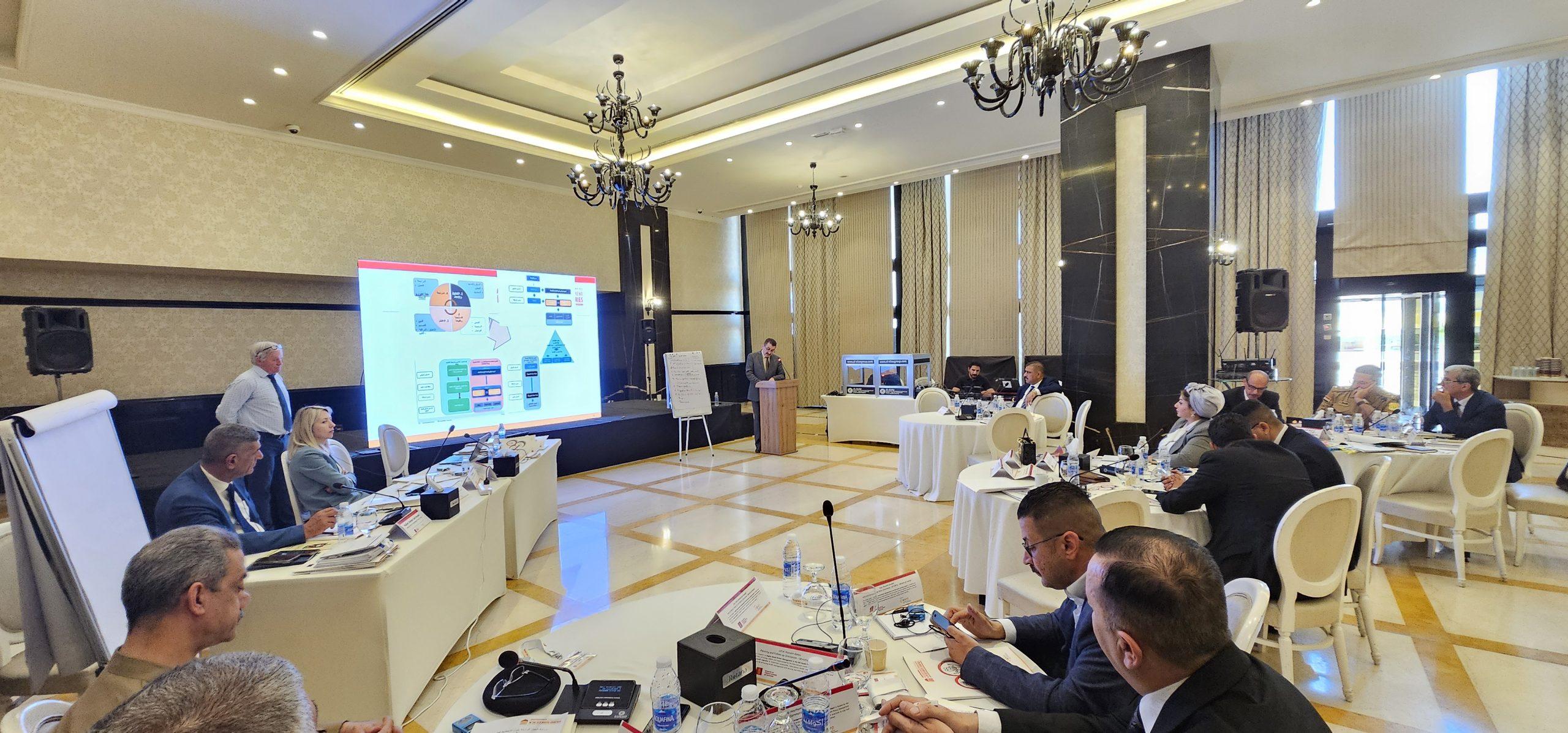
In April, under the Danish-funded project ‘Rights-Based Border Management in the Silk Routes countries’ (RBM-Silk Routes), ICMPD hosted in Baghdad the 4th workshop on Contingency Planning (CP) for border emergencies. This event brought together key stakeholders to strategize and enhance joint coordination and response measures during emergencies at Iraqi borders.
Crises, incidents, emergencies, and disasters, whether natural or arising from human activities, often have harmful and devastating impacts on society and the environment. Mitigating these effects often requires an effective and unified joint and coordinated emergency response, involving all necessary partners, including governmental agencies, the private sector, and civil society organisations.
To support the Iraqi government in strengthening of such coordination, a series of inter-agency workshops were initiated in partnership with the National Security Advisory as the leading agency in the development of the National Integrated Border Management Strategy, which includes an enhanced crisis preparedness and management as one of its five strategic goals. This work started with an Awareness raising workshop on contingency planning conducted in March 2023 and aimed at raising awareness among national authorities about a contingency planning approach and its benefits in the context of border management. This was followed by two national workshops on contingency planning at the borders, organised in coordination with the National Security Advisory. These workshops created space to discuss and develop the national contingency model manifested through the document “Guidelines and principles for joint coordination and response in case of emergencies at the borders.” This document aims to elaborate on the frameworks, structures, guidelines, and principles necessary for coordination and emergency response in case of crises at the borders. It provides an overview and connects already existing structures while offering further recommendations on how to enhance coordination and connection between those frameworks, in line with the developed Iraq’s National Integrated Border Management Strategy.
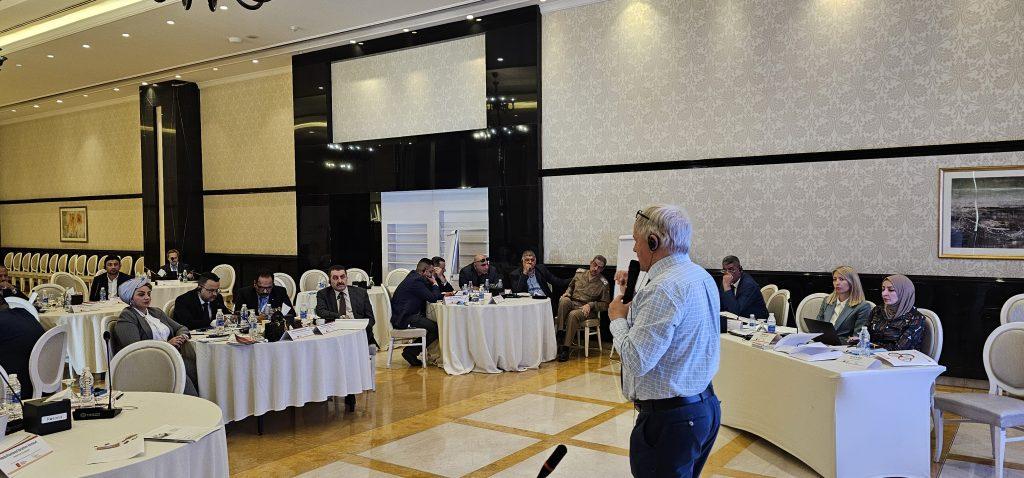
The latest workshop aimed to align stakeholders in joint contingency planning for border emergencies through focused sessions. Emphasis was placed on risk analysis and testing to enhance the effectiveness of contingency plans. Participants discussed testing purposes, objectives, emergency scenarios, and best practices, and prepared for the upcoming testing exercise. Further discussions delved into planning assumptions, practicalities, and methods for monitoring and evaluation within an agreed scenario.
The work in this area will continue in the second half of 2024 through a tabletop exercise, development of the training curriculum, and the delivery of the training programme on contingency planning at borders.