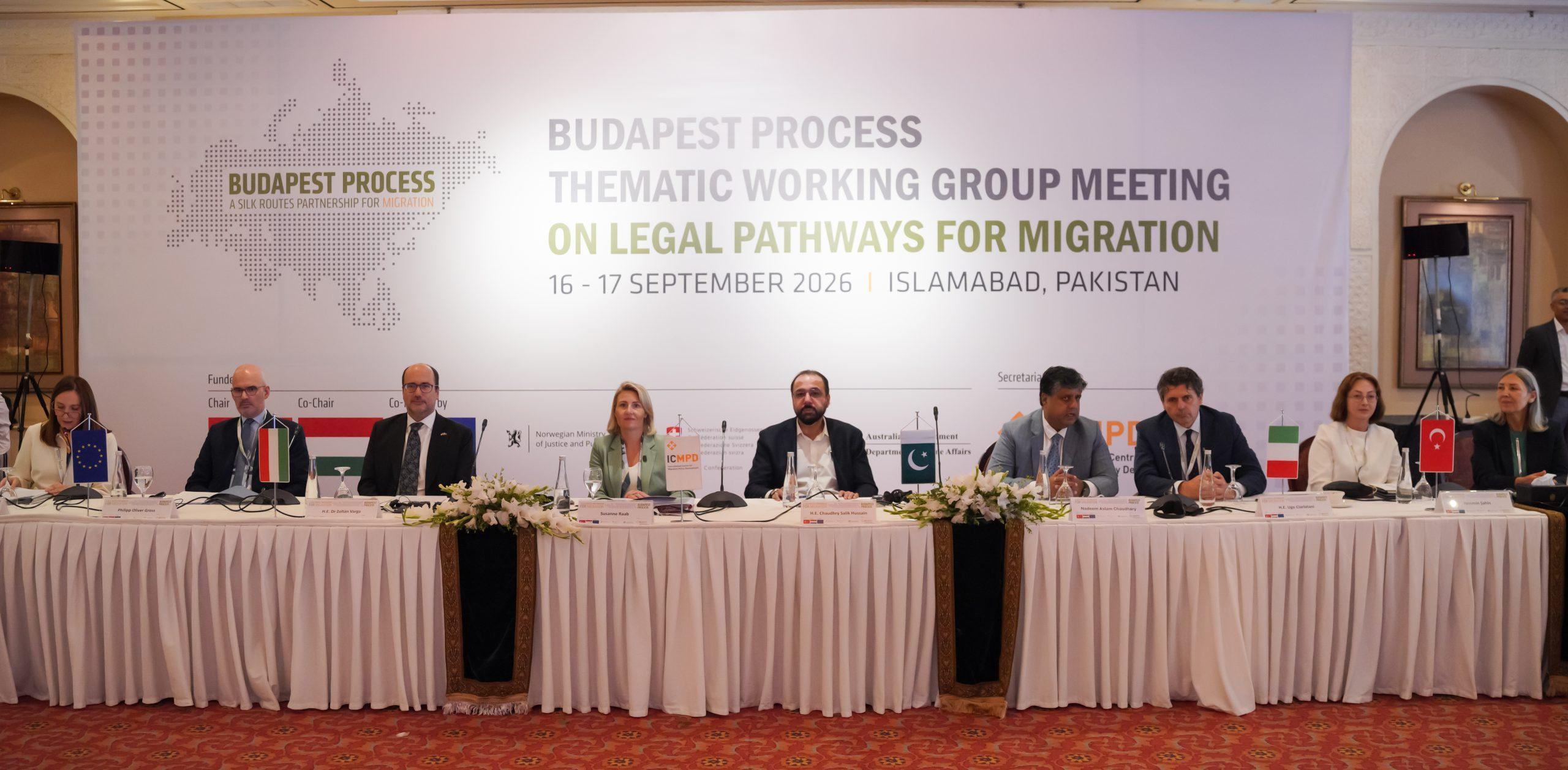
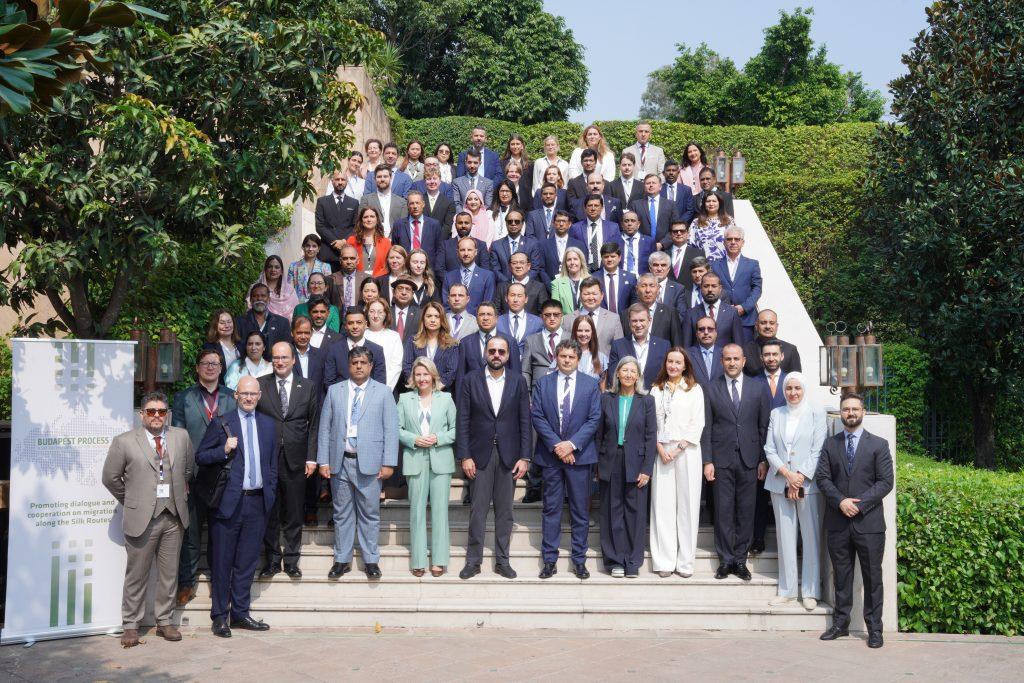
Over 100 participants from 22 countries and 10 partner organisations, along with 13 private-sector partners were hosted in Islamabad on 16-17 September 2026 to strengthen private-sector engagement in skills-based labour migration partnerships. For the first time in the Working Group’s meetings, the private sector is directly at the centre of its discussions, where participants examined how labour-market demand can be better matched with skills development, qualification recognition and fair recruitment across the Silk Routes region.
Co-chaired by Pakistan and Italy, the Thematic Working Group on Legal Pathways for Migration meeting built on the conclusions of the 2025 Thematic Meeting in Islamabad, particularly its recommendation to strengthen private sector engagement in skills-based labour migration partnership. Bringing employers into a dialogue previously conducted largely among governments, has marked a practical step in implementing Priority Goal 2 of the 2024 Budapest Process Ministerial Declaration and its Call for Action 2025–2030. This particularly refers to commitments to enhance cooperation on legal migration pathways and promote skills development and matching through partnerships with [private sector] employers.
“If legal pathways are to work, they must start with real labour-market demand. Employers must tell us where the shortages are and what skills are required; governments must create the conditions for lawful mobility; training institutions must prepare people for actual jobs; and recruitment systems must remain fair and transparent,” said HE Chaudhry Salik Hussain, Federal Minister for Overseas Pakistanis and Human Resource Development (MOPHRD).
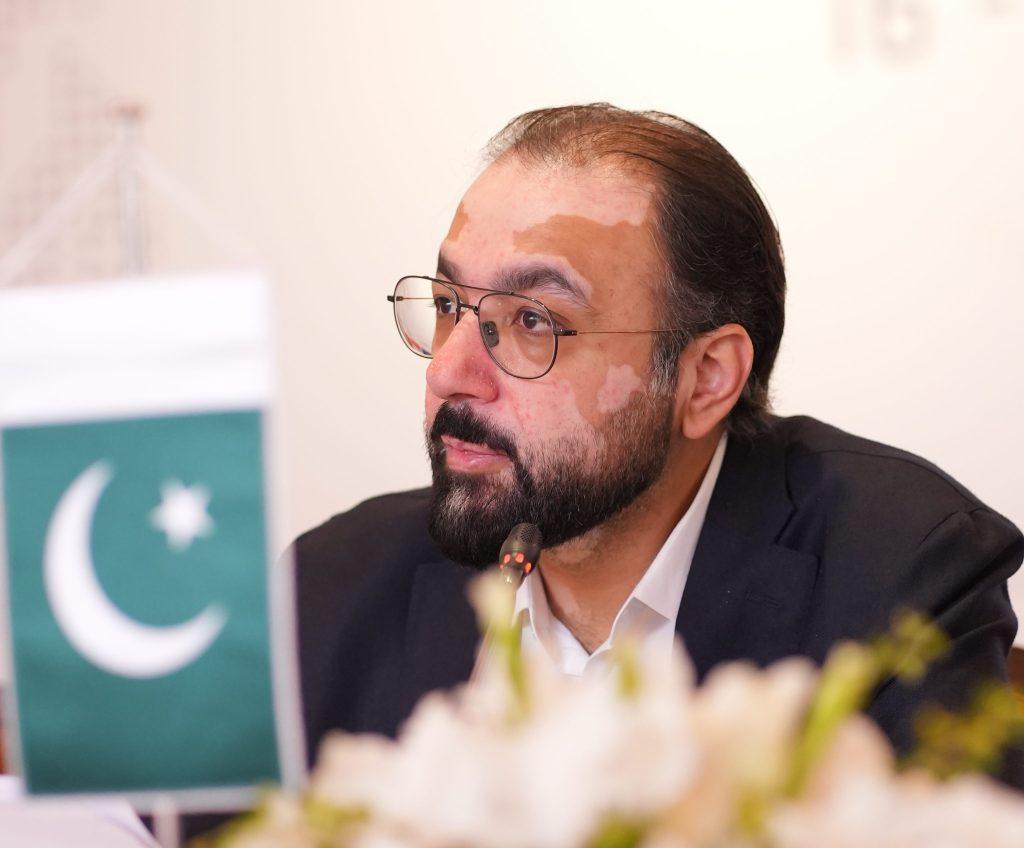
Since joining the Budapest Process in 2013, Pakistan’s participation in the Dialogue has supported closer cooperation with the European Union, EU Member States and other partner countries. As Co-Chair of the Thematic Working Group on legal pathways for migration, Pakistan also brings its experience as a major country of origin for migrant workers to advancing practical cooperation on legal pathways.
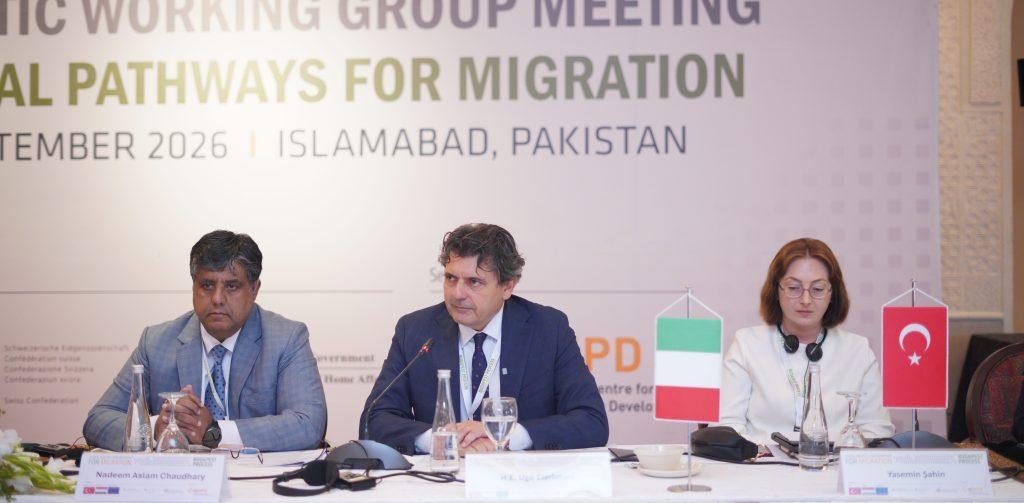
Speaking on behalf of Italy as Co-Chair of the Thematic Working Group, HE Ugo Ciarlatani, Italian Ambassador to Pakistan, said:
“Coordinated management of regular migration contributes to the economic, social and cultural development of the countries involved, with mutual benefit for both destination and origin countries. The Budapest Process provides an invaluable platform to advance practical cooperation on legal migration between countries of origin, transit and destination.”
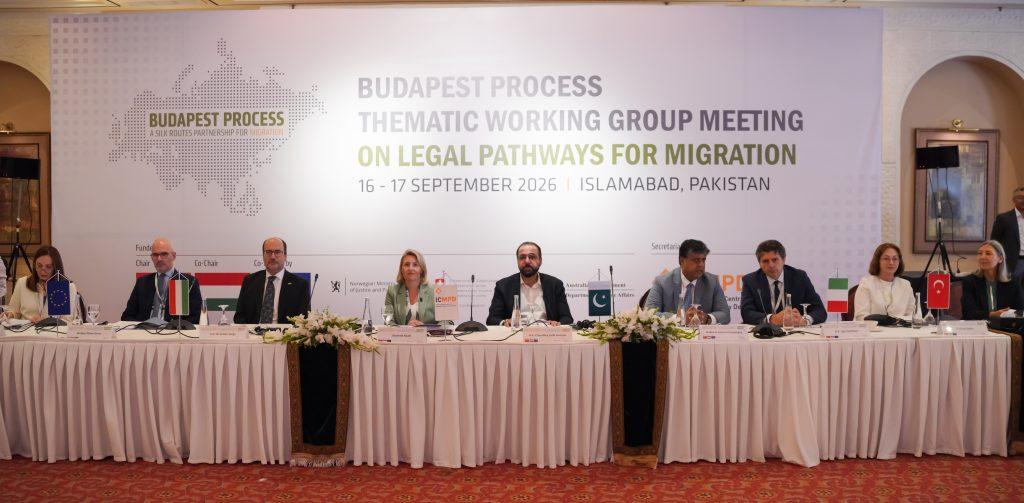
Discussions across the two-day meetings explored the needs to translate labour shortages into effective mobility pathways. Participants discussed workforce needs in sectors including transport, hospitality and tourism, as well as changing labour-market dynamics in countries increasingly recruiting foreign workers. Employers and recruitment specialists highlighted practical obstacles including skills mismatches, qualification recognition, administrative requirements and the cost and time involved in international recruitment.
Perspectives from governments, employers, and international organisations, meanwhile, showed that successful partnerships must be developed from both ends: destination countries and employers need to define their workforce requirements clearly, while countries of origin need to translate those requirements into relevant training, assessment and preparation.
"ICMPD is proud to serve as Secretariat of the Budapest Process, which remains one of the best established and most respected intergovernmental dialogues on migration, for over three decades now. We are happy to be a central part of its evolution and continued relevance, expanding both its geographical reach and thematic scope; and providing a trusted platform to foster mutual understanding, policy exchange, and balanced approaches to migration across highly diverse regions stretching from Europe to the Silk Routes, " said Susanne Raab, ICMPD Director General.
Ms Raab also acknowledged Pakistan for hosting this very timely event; the co-chairmanship of Italy for the Thematic Working Group on Legal Pathways; as well as Türkiye and Hungary as Chair and Co-Chair of the Budapest Process, together with the European Union and the European Commission, for their sustained support for the Dialogue.
The discussions also pointed to the value of involving employers earlier in the design of training, recruitment, and job-matching. At the same time, participants stressed that transparency, fair recruitment, and worker protection must be built into mobility schemes from the outset. The Migrant Resource Centres (MRC) and other trusted national services can support this process by helping prospective migrants understand legal opportunities, recruitment procedures, employment conditions and their rights before departure.
This link between policy and practice was reinforced by hosting the Meeting alongside the 5th MRC Regional Exchange, as the MRC network, an ICMPD flagship initiative, marks its 10th anniversary. Such a connection comes full circle, since the idea that launched the MRC network first took shape at a Budapest Process Working Group meeting in Islamabad in 2013.
By gathering institutions responsible for labour-market policy, skills development, recruitment and worker protection, the Meeting laid a stronger foundation for mobility partnerships that respond to employer demand while providing fair, transparent and sustainable opportunities for migrant workers. Drawing these different strands together, participants identified actions to guide the future work of the Thematic Working Group.
Established in 1993, the Budapest Process is an intergovernmental dialogue that brings together more than 50 governments and over 15 partner organisations to strengthen cooperation on migration and mobility. Türkiye chairs the dialogue, Hungary serves as the Co-Chair and ICMPD acts as the Secretariat.