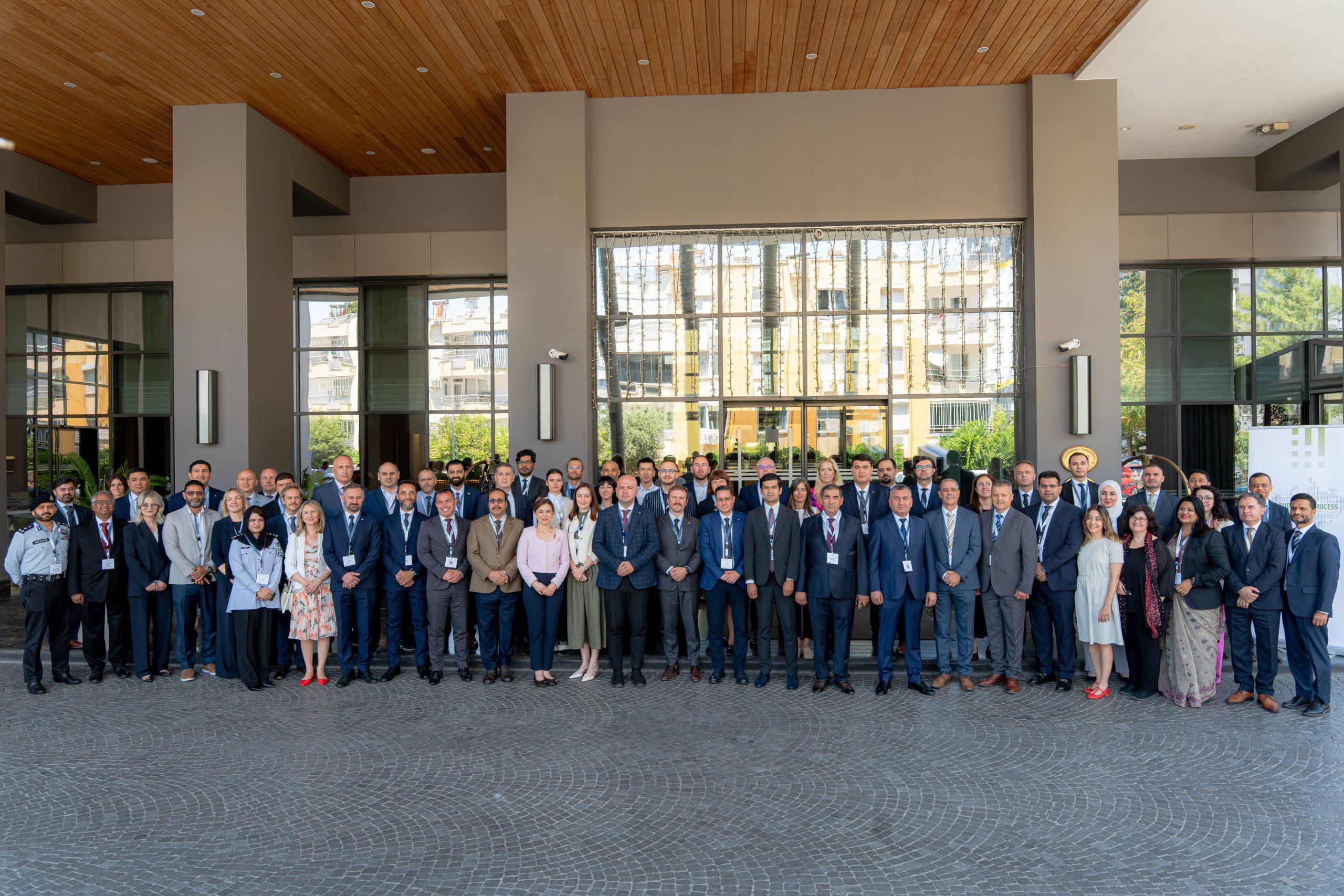
On 25-26 June 2026, the Budapest Process Thematic Working Group (TWG) on Law Enforcement Cooperation convened in Antalya, Türkiye, bringing together 71 participants from 24 countries and 7 international organisations – law enforcement practitioners and senior officials. The meeting aimed to advance work on a draft Budapest Process Roadmap on Law Enforcement Cooperation (Roadmap), and further strengthen mechanisms for law enforcement responsiveness to developments along migration routes including irregular migration and related risks and crimes, trafficking in human beings and migrant smuggling.
Co-chaired by Bulgaria and Iraq, the meeting built on the priorities set out in the November 2024 Ministerial Declaration and Call for Action 2025-2030. It followed directly from the previous TWG meeting held in Sofia October 2025, which had called for a shift toward more structured operational outcomes.
Opening the meeting, representatives of co-chairs Bulgaria and Iraq, joined by Türkiye as Budapest Process Chair, the European Commission and the Budapest Process Secretariat, underlined a shared message – translating collective knowledge into a structured and operational framework for future cooperation.
The first day opened with a look at current migration, smuggling and trafficking dynamics across the routes. Representatives from the Mixed Migration Centre, FRONTEX, INTERPOL, UNHCR and the Bulgarian Border Police examined how shifting geopolitics, evolving enforcement environments and changing criminal tactics are reshaping migration routes from the adaptability of smuggling networks to the growing risk of fraudulent recruitment targeting vulnerable migrants. Participants discussed how shifts along one segment of a route ripple across others – a reminder that migration dynamics are regional, not national, and transnational in nature.
The discussion then focused on ensuring effective cross-border cooperation on information exchange and risk analysis. Countries shared progress made at national levels, but also common challenges connecting different information systems, timely sharing of analytical information, and sustaining cooperation beyond individual projects or meetings, across varied legal, institutional and technical environments.
These discussions highlighted the growing importance of the Community of Law Enforcement Practitioners (COLEP) established under the Budapest Process and now entering a new phase of implementation, following the approval of funding by the European Commission. COLEP brings together practitioners from countries of origin, transit and destination to strengthen information exchange, build mutual trust and enhance operational cooperation along migration routes. COLEP will help translate the priorities outlined in the Budapest Process Ministerial Declaration and its accompanying Call for Action into tangible outcomes through strengthened collaboration and peer-to-peer exchange among law enforcement practitioners.
Capacity building with Budapest Process countries and partner organisations formed the third area of discussion and explored how training institutions can cooperate more effectively through joint activities and shared learning. Participants stressed that effective cross-border cooperation ultimately depends on people. While modern systems and communication platforms facilitate information exchange, cooperation continues to rely on professional relationships, trust and a shared understanding developed through interaction, joint training, and activities alike.
Building on these discussions, participants have identified concrete actions and initiatives to be included in the future Budapest Process Roadmap on Law Enforcement Cooperation.